Innovations Reshaping Global Markets
Introduction
Tech enthusiasts and professionals worldwide eagerly await the pulse of innovation, and September 2025 delivers a torrent of transformative news. From Apple’s highly anticipated product unveilings to AI advancements that redefine healthcare and computing, these stories highlight how technology accelerates progress across borders. In India, booming digital economies leverage these updates for affordable AI tools; in the USA, they fuel Silicon Valley’s dominance; China’s manufacturing prowess integrates them into EVs; Russia’s focus on space tech aligns with scientific detectors; and Japan’s precision engineering enhances wearables. This listicle breaks down the top 10 stories, each with detailed analysis, features, and global implications. Professionals in content writing and SEO will find these topics ripe for evergreen content, optimizing for keywords like “tech news 2025” to rank high on Google. Dive in to understand how these developments shape daily life and business strategies.
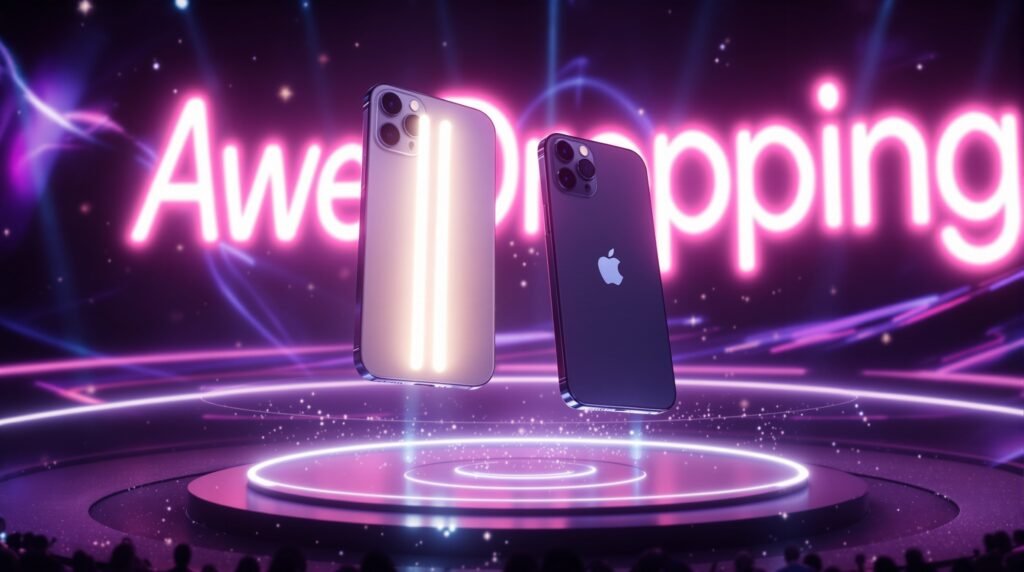
1. Apple Unveils iPhone 17 Series and Ultra-Thin iPhone Air at “Awe Dropping” Event
Apple captivates the world with its September 2025 keynote, launching the iPhone 17 lineup that blends cutting-edge design with AI prowess. The standard iPhone 17 introduces a 120Hz ProMotion display for smoother scrolling, powered by the efficient A19 chip that handles on-device AI tasks like real-time photo editing and voice commands. Engineers crafted the iPhone 17 Air as the thinnest smartphone yet at just 5.5mm, featuring a 6.6-inch OLED screen and a 48MP camera system optimized for low-light photography. Pro models elevate professionals with vertical camera arrays for cinematic video and extended battery life up to 20 hours of mixed use.
The iPhone Air ditches physical SIM slots entirely, embracing eSIM technology to streamline global connectivity—a boon for travelers in India and Japan where network fragmentation persists. In the USA and China, this vertical integration reduces reliance on third-party modems, potentially cutting costs and boosting Apple’s market share amid trade tensions. Russia’s tech-savvy users benefit from enhanced AI translation features for multilingual apps. Overall, these launches project $250 billion in annual revenue for Apple, influencing stock markets from Mumbai to Moscow. For more details, visit Apple’s official event recap at apple.com/events/september-2025.
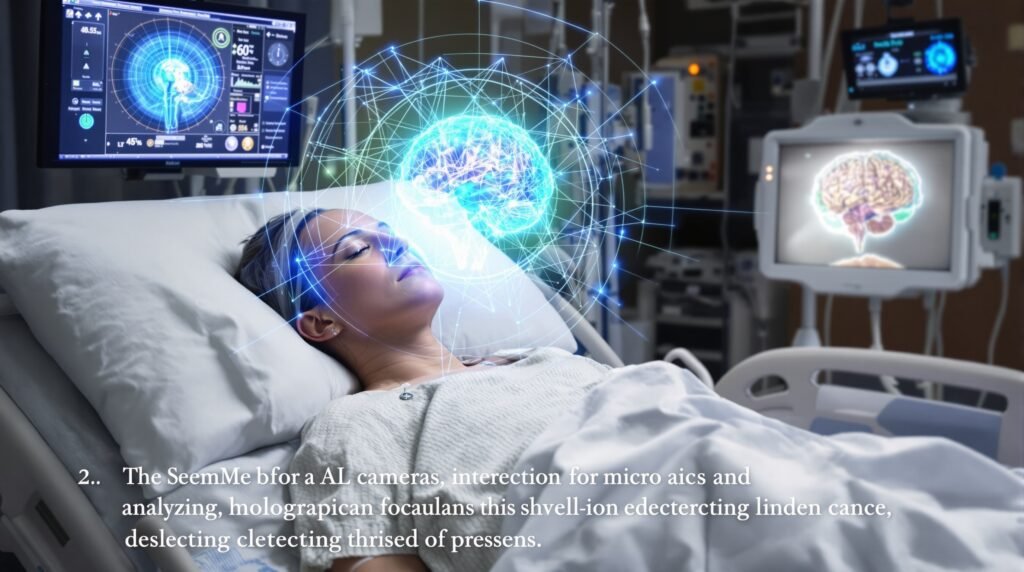
2. SeeMe AI Detects Hidden Consciousness in Coma Patients, Revolutionizing Healthcare
Researchers at Stony Brook University introduce SeeMe, an AI system that analyzes micro-facial expressions to uncover covert consciousness in coma patients four to eight days faster than conventional methods. This tool processes video feeds in real-time, identifying subtle twitches that signal awareness and guiding doctors to adjust treatments accordingly. By preventing hasty life-support decisions, SeeMe could save countless lives and reduce healthcare costs by up to 30%.
In India, where road accidents claim over 150,000 lives annually, hospitals integrate SeeMe to optimize ICU resources amid growing demand. The USA’s advanced medical facilities accelerate its adoption, potentially influencing FDA approvals for AI diagnostics. China’s vast hospital networks, supported by state AI initiatives, deploy it nationwide for efficient care. Russia and Japan, with aging populations, use it to enhance neurological research—Japan’s robotics expertise pairs perfectly with this for hybrid monitoring devices. This breakthrough underscores AI’s ethical role in medicine, sparking global discussions on data privacy. Learn more from the Stony Brook press release at news.stonybrook.edu.
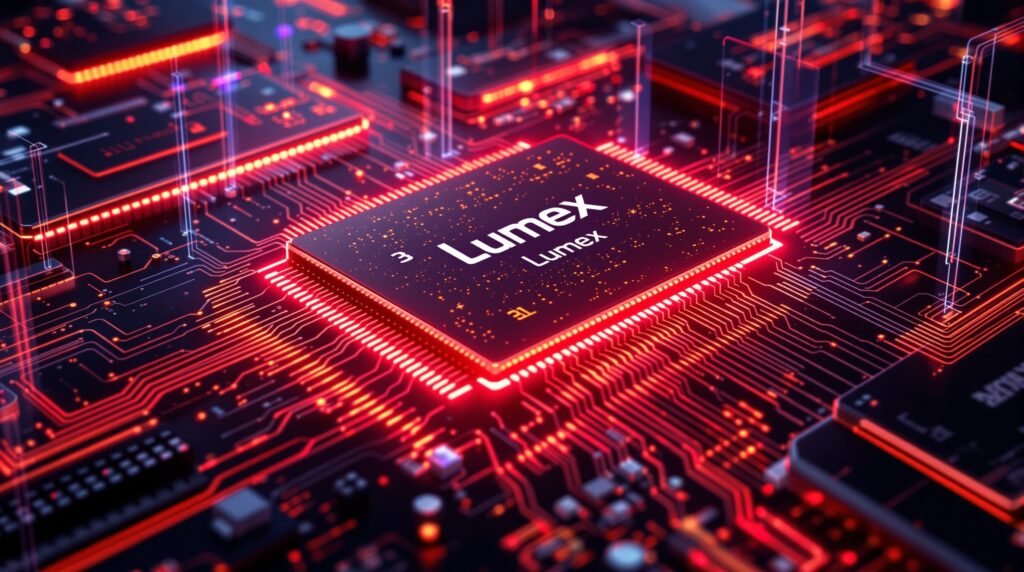
3. Arm Launches Lumex Mobile Chips for On-Device AI in Smartphones and Wearables
Arm revolutionizes mobile computing with Lumex chips, built on a 3nm process that enables smartphones to run complex AI models locally without cloud dependency. These processors deliver 40% better energy efficiency, powering features like instant language translation and augmented reality overlays directly on devices. Developers now create apps that process data offline, enhancing privacy and speed.
Indian consumers, embracing budget 5G phones, gain access to affordable AI enhancements, boosting e-commerce and education apps. In the USA, tech giants like Apple and Google integrate them for seamless experiences. China’s Huawei and Xiaomi lead production, solidifying its supply chain dominance. Russia counters sanctions by fostering domestic chip design, while Japan’s Sony refines wearables for precise health tracking. Lumex positions Arm as a cornerstone of the $500 billion mobile AI market by 2030. Check Reuters’ coverage at reuters.com/business/arm-launches-new-generation-mobile-chip-designs-geared-ai-2025-09-10.

4. Eli Lilly’s TuneLab AI Platform Accelerates Drug Discovery with Proprietary Data
Eli Lilly debuts TuneLab, an AI platform that leverages over $1 billion in R&D data to simulate drug interactions, slashing development timelines from years to months. Partnering with startups like Insitro, it trains models on vast datasets to predict molecule efficacy, targeting diseases like cancer and diabetes with unprecedented accuracy.
This innovation excites India’s pharmaceutical sector, the world’s third-largest, by enabling generic drug makers to innovate faster and export globally. The USA’s biotech hubs in Boston accelerate trials, fostering job growth. China invests heavily, aligning with its “Made in China 2025” plan for self-reliant pharma. Russia’s focus on biopharma benefits from collaborative data sharing, and Japan’s precision medicine integrates TuneLab for personalized therapies. Expect a 25% rise in successful drug approvals industry-wide. Explore the announcement on Reuters at reuters.com/business/healthcare-pharmaceuticals/lilly-launches-ai-powered-platform-accelerate-drug-discovery-2025-09-09.
5. Microsoft Strikes Multi-Billion Deal with Nebius for AI Cloud Infrastructure
Microsoft secures a landmark agreement with Nebius, investing billions in a New Jersey data center to expand Azure’s AI capacity. This deal equips enterprises with dedicated GPU clusters for training massive models, addressing the surge in AI workloads from generative tools to analytics.
Businesses in India scale cloud operations for startups, reducing latency for Bollywood’s VFX and fintech apps. The USA’s enterprises dominate with faster deployments, while China’s Alibaba competes by enhancing local clouds. Russia leverages Nebius’ European roots for secure data processing, and Japan’s Sony uses it for gaming simulations. This partnership underscores the $1 trillion AI infrastructure race, promising scalable innovation. Read the full story at nebius.com/newsroom.
6. SentinelOne Acquires Observo AI for $225 Million to Bolster Cybersecurity
SentinelOne acquires Observo AI in a $225 million deal, merging advanced threat detection with real-time analytics to fortify enterprise security. The integration filters vast data streams, identifying anomalies before breaches occur and integrating with SIEM systems for proactive defense.
Indian IT firms protect against rising cyber threats in digital banking, safeguarding millions. The USA’s cybersecurity market, valued at $200 billion, sees enhanced tools for federal agencies. China’s state-backed hackers prompt stricter implementations, while Russia’s expertise in digital warfare adopts it for national security. Japan fortifies its manufacturing sector against IP theft. This move signals a wave of AI M&A, projected to exceed $50 billion annually. Details available at securityweek.com.
7. Xpeng Plans Global Launch of Affordable Mona EV Series in 2026
Chinese EV leader Xpeng announces the worldwide rollout of its Mona series in 2026, targeting mass-market buyers with vehicles under $20,000. Featuring autonomous driving Level 3 and 500km range, these compact cars integrate AI for urban navigation and energy optimization.
India’s growing EV adoption surges with affordable imports, supporting its 30% electrification goal by 2030. The USA faces competition from Tesla, spurring domestic production. China dominates exports, while Russia’s harsh climates test the vehicles’ durability. Japan refines battery tech for collaborations. This launch could capture 15% of the global EV market, accelerating sustainable transport. CNBC reports more at cnbc.com/technology.
8. EPA Accelerates Permits for AI Data Centers Under Trump’s AI Action Plan
The U.S. EPA streamlines approvals for AI data centers, aligning with President Trump’s “Winning the Race” initiative to outpace China in AI infrastructure. This policy fast-tracks environmental permits, enabling rapid construction of energy-efficient facilities.
Indian firms partner with U.S. clouds for hybrid setups, boosting data sovereignty. The USA cements its lead, creating 100,000 jobs. China responds with domestic expansions, Russia explores energy-efficient designs for Arctic centers, and Japan invests in green tech integrations. Public trust in AI rises to 31%, though job displacement concerns linger at 73%. Reuters covers the policy at reuters.com/legal/litigation/trump-epa-seeks-speed-up-permitting-ai-infrastructure-2025-09-09.
9. Superconducting Detector Promises to Unravel Dark Matter “Wind”
Physicists develop a novel superconducting detector that probes the elusive “wind” of dark matter particles, potentially confirming its existence through ultra-sensitive measurements. This tech amplifies faint signals from galactic streams, offering insights into the universe’s 85% invisible mass.
India’s ISRO collaborates on space applications, enhancing satellite tech. The USA’s NASA leads funding for cosmology projects. China’s FAST telescope integrates it for observations, Russia’s Roscosmos advances particle research, and Japan’s Subaru aids in data analysis. This could rewrite physics textbooks and spur $10 billion in research investments. SciTechDaily details the breakthrough at scitechdaily.com/dark-matter-wind-detector-2025.
10. Google Pixel Outshines iPhone in AI-Driven Everyday Tasks
Google’s latest Pixel smartphones excel in AI benchmarks, handling tasks like predictive texting and image generation faster than Apple’s iPhone, thanks to advanced Tensor chips. Side-by-side tests reveal Pixels’ edge in natural language processing and battery optimization for AI features.
Indian users adopt Pixels for affordable AI in education apps. The USA’s Android ecosystem thrives, challenging iOS dominance. China customizes them for local services, Russia values offline capabilities, and Japan integrates with smart homes. This rivalry pushes innovation, with AI now defining “smart” devices. The Washington Post analyzes at washingtonpost.com/business/technology/ai-pixel-vs-iphone-2025.
Conclusion
September 2025’s tech news paints a vibrant picture of progress, where AI, hardware, and sustainability converge to empower global audiences. From Apple’s sleek designs influencing consumer trends in Japan and India to AI tools transforming healthcare in the USA and China .