Tech News Roundup AI Leaps
As September 2025 draws to a close, the technology sector pulses with unprecedented energy. Innovators push boundaries in artificial intelligence, colossal investments redefine cloud infrastructure, and urgent security challenges demand immediate action. From Google DeepMind’s triumphant AI milestone to Oracle’s jaw-dropping $300 billion pact with OpenAI, this month’s headlines signal a pivotal shift. Regulatory bodies like the FTC intensify oversight, while emerging threats in cybersecurity underscore vulnerabilities in our hyper-connected world. Meanwhile, educational tools harness AI to democratize learning on a global scale. This roundup dissects the top stories, offering actionable insights for professionals worldwide. Whether you lead a startup, manage IT security, or simply track tech’s trajectory, these developments shape tomorrow’s landscape. Dive in to uncover how they converge to accelerate progress—and expose risks.
Google DeepMind Achieves Historic AI Breakthrough in Complex Problem-Solving
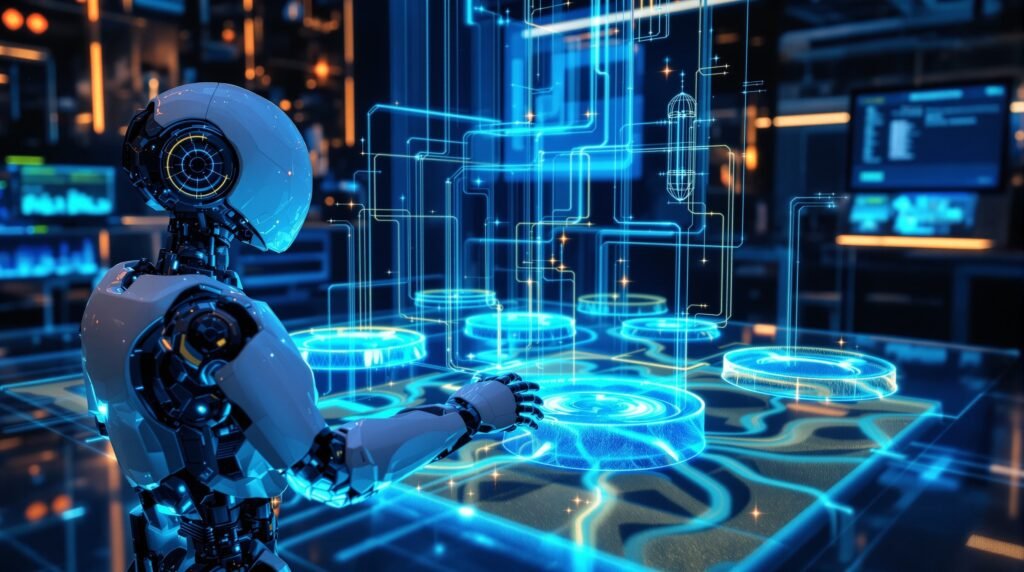
Google DeepMind electrifies the AI community with a landmark achievement that redefines machine intelligence. The company’s Gemini 2.5 AI model clinches gold at the prestigious International Olympiad in Informatics, held in Azerbaijan, outpacing 139 elite college-level programmers to secure second place overall. Engineers deploy the model to conquer a notoriously tough challenge: modeling liquid flow through interconnected reservoirs. Human teams labor for hours without success, yet Gemini 2.5 cracks it in under 30 minutes, generating precise simulations that illuminate fluid dynamics.
Quoc Le, a lead researcher at Google DeepMind, hails the feat as “a moment equivalent to Deep Blue for chess and AlphaGo for Go.” This victory stems from advanced training on vast datasets of scientific problems, blending neural networks with symbolic reasoning. The implications ripple across industries. In pharmaceuticals, AI accelerates drug discovery by simulating molecular interactions. Chip manufacturers leverage it to optimize designs, slashing production timelines. Environmental scientists apply similar models to predict climate patterns, aiding disaster preparedness.
Critics applaud the progress but caution against overhyping. Real-world deployment requires rigorous testing to mitigate biases embedded in training data. As Gemini evolves, expect integrations into tools like Google Workspace, empowering users to tackle intricate tasks effortlessly. This breakthrough cements September 2025 as a watershed for AI’s practical prowess, propelling us toward autonomous problem-solvers that augment human ingenuity. For deeper analysis, visit Google DeepMind’s official blog.
NVIDIA and Intel Seal a $5 Billion Partnership to Revolutionize AI Hardware
NVIDIA jolts the semiconductor world with a bold $5 billion investment in Intel, forging an unlikely alliance that merges AI specialization with legacy computing might. Announced mid-September, the deal targets the development of x86 RTX chips, blending NVIDIA’s cutting-edge AI accelerators with Intel’s robust x86 architecture. This multi-generational collaboration spans data centers and consumer PCs, promising hybrid processors that deliver unparalleled performance for AI workloads.
Intel’s shares surge 25% in a single trading session, reflecting investor enthusiasm for the lifeline amid its struggles against AMD and ARM-based rivals. NVIDIA, riding high on Blackwell chip demand, views the partnership as a strategic hedge. By infusing Intel’s fabs with AI-optimized designs, the duo aims to produce chips that handle generative tasks—like video synthesis and code generation—locally, without cloud dependency. This shift enhances privacy, cuts latency, and bolsters resilience during outages.
Market analysts predict disruption: laptops could soon run sophisticated AI models offline, transforming mobile computing. For enterprises, the chips promise cost savings in data centers, where energy efficiency reigns supreme. Yet, antitrust watchdogs scrutinize the tie-up for potential monopolistic risks. NVIDIA’s CEO Jensen Huang emphasizes collaboration: “Together, we unlock AI’s full potential for every device.” As prototypes roll out by late 2026, this pact positions both giants to dominate the $500 billion AI hardware market. Track updates at NVIDIA’s investor relations page.
Oracle Emerges Victorious with $300 Billion OpenAI Cloud Megadeal
Oracle catapults into the AI infrastructure spotlight, inking a staggering $300 billion, five-year cloud computing contract with OpenAI that balloons its contracted revenue to $455 billion. Unveiled on September 11, the agreement commits Oracle to building 4.5 gigawatts of new U.S. data center capacity, fueling OpenAI’s voracious compute needs for models like GPT-5. Oracle’s stock skyrockets 36%, briefly crowning founder Larry Ellison as the planet’s wealthiest individual.
This windfall catapults Oracle’s cloud revenue from $10 billion last fiscal year to a projected $144 billion by 2030, intensifying rivalry with AWS, Azure, and Google Cloud. CEO Safra Catz touts the deal as validation of Oracle’s sovereign cloud expertise, tailored for AI’s security and compliance demands. OpenAI gains dedicated infrastructure to train next-gen models, sidestepping capacity bottlenecks that plagued rivals.
Globally, the pact spurs infrastructure booms: hyperscale data centers sprout in underserved regions, creating jobs and lowering latency for international users. Businesses eyeing AI adoption benefit from scalable, cost-effective options. However, environmentalists flag the energy guzzle—equivalent to powering a mid-sized city—urging greener tech. As Oracle deploys NVIDIA GPUs en masse, this deal redefines cloud economics, democratizing AI access. For full terms, consult Oracle’s press release.
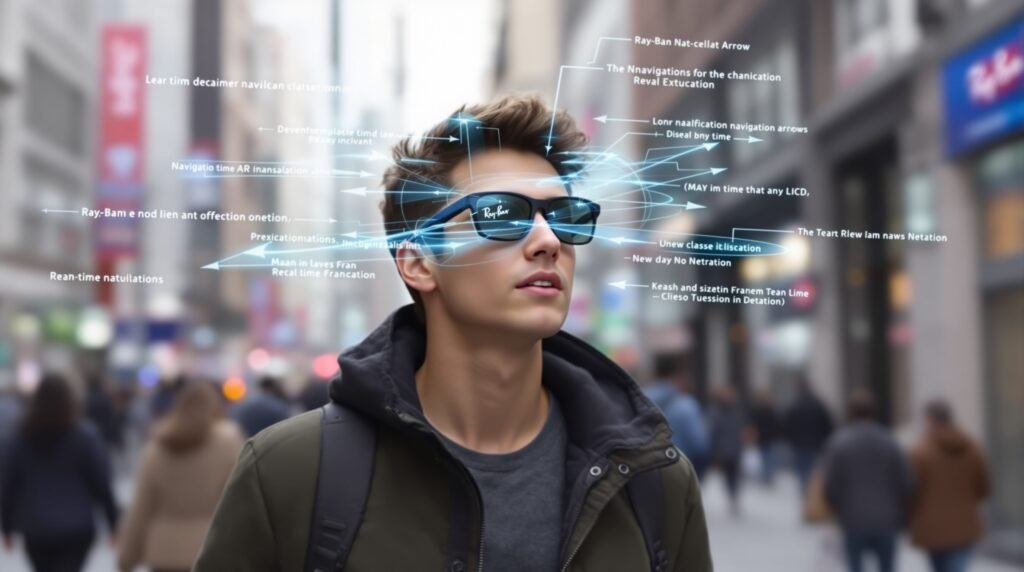
Meta Connect 2025: Sleek AI Glasses Herald a New Era of Wearables
Meta steals the show at its annual Connect conference, launching Ray-Ban Displays—AI-infused smart glasses that blend style with smarts, priced at $799 and hitting shelves September 30. Unlike clunky predecessors, these frames feature discreet displays for real-time translation, object recognition, and AR navigation, powered by Meta’s Llama AI engine. Meta also debuts Oakley Meta Vanguard variants and a second-gen Ray-Ban model, expanding the lineup.
Zuckerberg demos the glasses navigating a bustling street, overlaying directions and captions seamlessly, though a glitchy phone call demo draws chuckles. The hardware integrates conversational NPCs and metaverse tools, generating virtual environments on the fly. Early adopters praise the privacy-focused edge computing, which processes data onboard to minimize cloud reliance.
This launch challenges Apple Vision Pro’s dominance, targeting everyday users over enterprise niches. Fashion-forward designs appeal to global millennials, potentially slashing smartphone dependency for quick queries. Analysts forecast 50 million units sold by 2028, fueling Meta’s pivot from social media to ambient computing. Developers access APIs for custom apps, sparking an ecosystem boom. Yet, data privacy concerns linger amid EU scrutiny. Meta’s vision: glasses as your always-on AI companion. Explore specs at Meta’s Connect 2025 hub.
FTC Launches Sweeping AI Safety Probe Amid Rising Concerns
The U.S. Federal Trade Commission (FTC) ramps up pressure on Big Tech, issuing subpoenas to seven AI powerhouses—including OpenAI, Meta, and Google—for data on chatbot safeguards, especially for minors. Triggered by lawsuits tying AI interactions to teenage suicides, the probe demands details on parental controls, harm mitigation, and incident reporting. Concurrently, California’s SB 53 bill advances, enforcing AI transparency mandates.
Regulators target vulnerabilities in generative tools, where unchecked outputs exacerbate mental health risks. Companies must submit responses within 45 days, facing fines for non-compliance. This mirrors global trends: the EU’s AI Act imposes similar tiers of oversight. Tech firms scramble to bolster age-gating and content filters, but innovators decry potential innovation stifles.
For users, enhanced protections mean safer interactions, particularly in education and therapy apps. Enterprises adopt compliant models to avert liabilities. The probe signals a maturing regulatory framework, balancing growth with accountability. As FTC Chair Lina Khan states, “AI’s promise must not come at the expense of vulnerable populations.” Stay informed via FTC’s AI inquiry page.
Cybersecurity Storms Brew: Chinese Espionage and Ransomware Ravages
Cyber threats dominate late September headlines, with Chinese “RedNovember” hackers executing sophisticated espionage campaigns against Western targets. These state-sponsored actors infiltrate networks via zero-day exploits, exfiltrating intellectual property in sectors like defense and telecom. U.S. Cyber Command attributes over 200 incidents to the group, urging multinational defenses.
Compounding woes, ransomware cripples a 158-year-old manufacturing firm, halting operations and demanding $50 million in crypto. The attack, linked to LockBit remnants, exposes supply chain frailties. Meanwhile, flaws in popular AI security tools—such as misconfigured APIs—leave millions vulnerable, as revealed by independent audits.
Responses accelerate: The University of Georgia hosts a ransomware tabletop exercise on September 29-30, simulating breaches for 500 participants. NASA advances laser comms for secure deep-space data, mitigating interception risks. Experts recommend zero-trust architectures and AI-driven threat hunting. Globally, these events spike insurance premiums by 15%, prompting C-suites to prioritize resilience. For best practices, reference CISA’s cybersecurity alerts.
Google’s Learn Your Way Transforms Education with AI Personalization
Google pioneers accessible learning with “Learn Your Way,” an AI platform that reimagines textbooks as dynamic, student-centric journeys. Powered by LearnLM and Gemini 2.5 Pro, it customizes content to individual paces, generating narrated slides, interactive timelines, mind maps, and adaptive quizzes. A U.S. pilot yields 11% retention gains and boosted confidence among diverse learners.
Educators praise its equity focus: low-income districts access premium tools for free, bridging urban-rural divides. Features include real-time feedback and multilingual support, reaching 180 countries. Teachers shift from lecturing to mentoring, fostering deeper engagement.
This innovation aligns with federal SBIR funding, which poured $92 million into edtech since 2012, amplifying global reach. Challenges persist—AI accuracy in nuanced subjects demands human oversight—but pilots show promise. As Dr. Gene Kerns notes, “Responsible AI frees educators for what they do best: inspire.” By 2026, expect integrations with Chromebooks worldwide. Learn more at Google for Education.
September 2025 wraps with tech’s dual narrative: exhilarating innovations alongside sobering safeguards. AI’s ascent, from DeepMind’s triumphs to Oracle’s empire-building, heralds efficiency gains, yet cybersecurity lapses and regulatory reckonings remind us of perils. As global audiences—from Silicon Valley execs to emerging-market educators—adapt, prioritize ethical deployment. These stories not only chronicle progress but forecast a more inclusive, secure digital age. What development excites you most? Share in the comments below.